/Marketing/LOGO/Horizontal%20Logo/Color/SMARTGYRO%20H_LOGO%20RGB.png?width=525&height=128&name=SMARTGYRO%20H_LOGO%20RGB.png "logo")


Energy consumption is one of the most common concerns when discussing gyro stabilizers. The idea of a heavy flywheel spinning at thousands of RPM naturally suggests high power demand. But this perception often overlooks how a gyroscopic stabilizer actually operates in real conditions.
Why Energy Consumption is Often Misunderstood
A gyroscopic stabilizer works by spinning a flywheel at high speed to generate stabilizing torque. At first glance, this sounds energy intensive (which it is during startup), however energy consumption is not constant, and not all operating phases are equal. Understanding this difference is key to understanding real onboard impact.
Spool-Up Phase
This is the phase when the flywheel needs to accelerate to its operating speed. It is the phase that demands the highest power, but only lasts for a short duration and only occurs only when starting the system. Depending on the model, Smartgyro systems require approximately 3.5 kW to 6 kW during spool-up. This is the peak value, and often the only number people remember, but it is also temporary.
Operating Phase (Steady State)
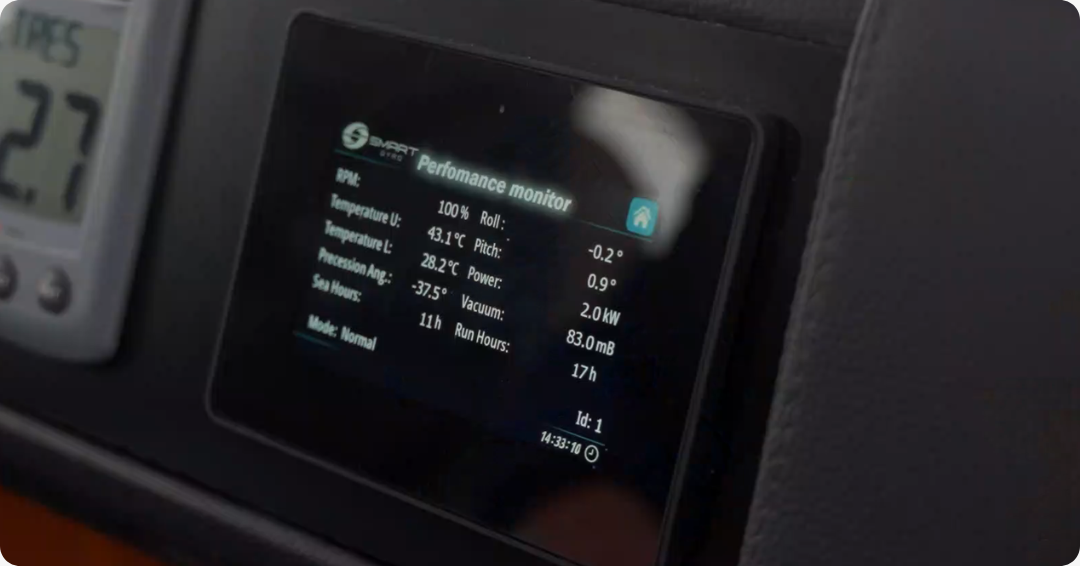
Once the flywheel reaches its operating speed, the system no longer needs to use energy to accelerate it. It then enters the phase in which it simply maintains rotation and actively stabilizes the vessel. This is known as the Continuous Operation phase, during which significantly less power is required, and actual energy consumption must be considered.
In normal operation, Smartgyro systems typically consume between 1.5 kW and 3.5 kW, depending on the model and sea conditions. This is the number that matters for onboard energy management.
Myth Vs Real Numbers
Myth: Gyro stabilizers consume a lot of power all the time.
Reality: Peak consumption occurs only during the Spool-up phase. During normal operation, power demand is lower, stable, and predictable.
Myth: Gyro stabilizers are not suitable for anchoring or long stays.
Reality: At operating consumption levels (typically around 2–3 kW) gyro stabilizers are fully compatible with generators, shore power and properly sized onboard electrical systems. They are specifically designed to improve comfort at anchor — where roll is most noticeable.
Myth: Higher performance means higher energy consumption.
Reality: Performance depends on how efficiently torque is generated, not simply on power input. Smartgyro systems achieve high stabilizing performance through:
- Vacuum flywheel environment: Reduces aerodynamic drag and lowers energy required to maintain speed.
- Integrated vacuum pump: Maintains optimal internal conditions over time.
- Liquid cooling system: Improves thermal efficiency and stabilizes the gyro’s operating conditions, thereby reducing energy losses.
- Intelligent control systems: Ensure stabilisation by synchronising it with the roll conditions, thereby optimising energy consumption in real time.
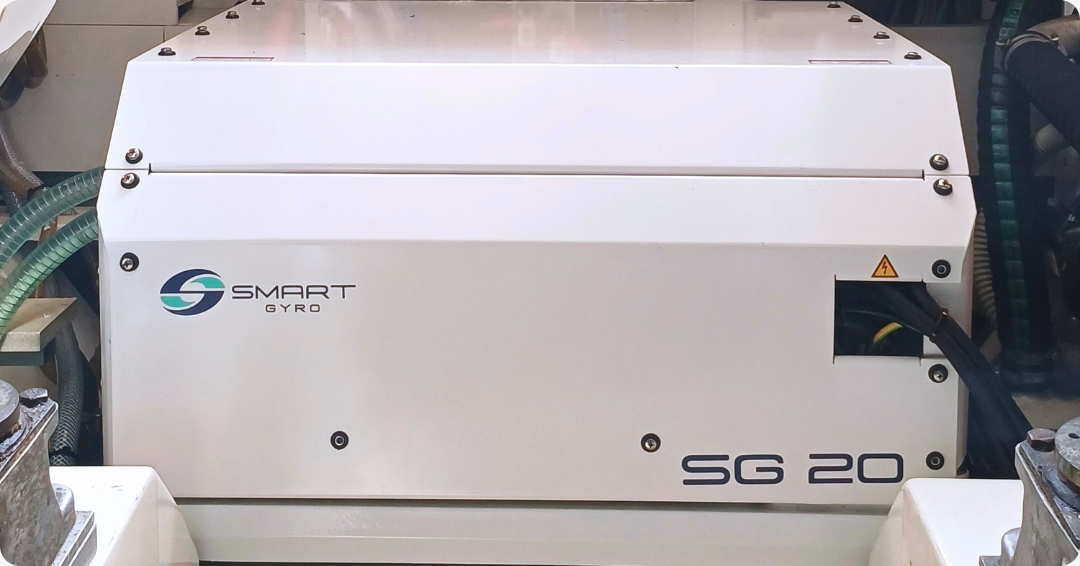
The Smartgyro SG20 can also be integrated for battery based operation, offering even greater flexibility and enabling silent stabilization without running the generator continuously.
All Smartgyro models provide a “Night speed” mode, in which the flywheel speed is reduced, further lowering energy consumption. When at anchor this reduced speed (and the resulting lower anti-roll torque) proves sufficient to ensure an effective roll damping. This achieves the desired comfort with the significant benefit of additional energy savings.
Smartgyro Power Consumption
|
Model |
Target Boat Size |
Spool-Up Power |
Operating Power (*) |
|
45–55 ft |
~3.5 kW |
1.5–2.5 kW |
|
|
50–60 ft |
~3.5 kW |
1.5–2.2 kW |
|
|
55–65 ft |
~4.5 kW |
2.0–3.3 kW |
|
|
60–70 ft |
~4.9 kW |
2.0–3.5 kW |
|
|
70–85 ft |
~5.5 kW |
2.0–3.0 kW |
|
|
80–95 ft |
~6.0 kW |
2.0–3.5 kW |
(*) @ Day mode (full) speed
To put these numbers into context:
-
A typical onboard air-conditioning system can consume similar or higher power, with many everyday onboard appliances operating in comparable ranges.
- The Smartgyro stabilizer runs at a steady, predictable load, it is not an exceptional energy burden, it is a managed, transparent and well documented electrical load.
In conclusion, energy consumption should never be evaluated in isolation, it should be considered in conjunction with all other parameters. By combining vacuum efficiency, intelligent control, and optimized system design, Smartgyro delivers high stabilizing performance while keeping energy consumption within practical onboard limits.